
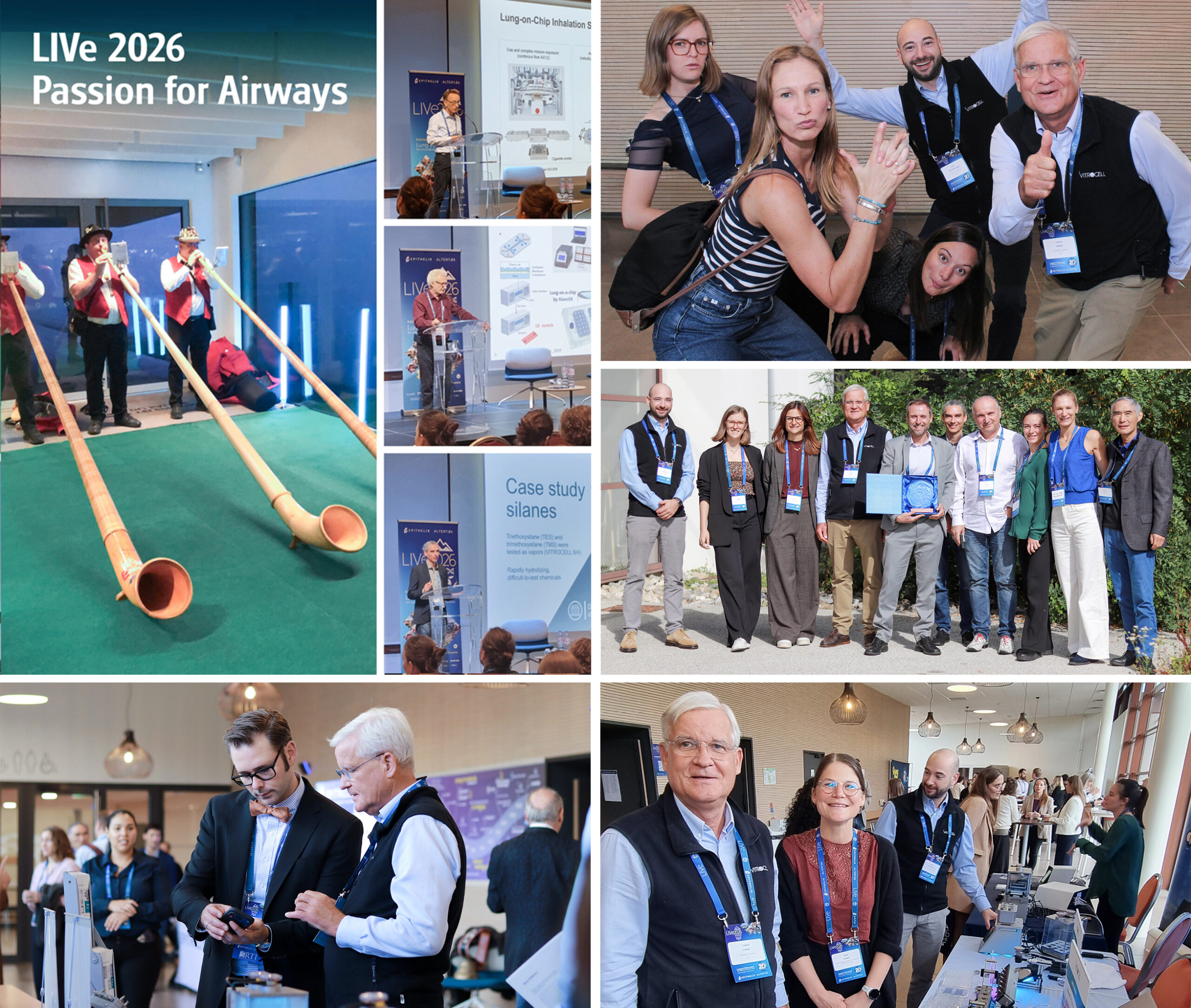
Looking back on a successful LIVe 2026 conference!
Organized by Epithelix and ALTERTOX, LIVe is a truly unique meeting. Few other conferences worldwide bring together so many researchers and specialists dedicated in vitro lung biology.
Since the last conference two years ago, substantial progress has been made in cell models, methodologies, and the generation of human-relevant data.
Beyond the conference itself, we would also like to recognize the Epithelix team for their significant contributions to advancing the respiratory field over the past 20 years.
A big thank you to the Epithelix and Altertox teams for organizing this outstanding event and bringing the community together.
It was rewarding to see VITROCELL technology referenced in numerous scientific presentations and posters.
Together with AlveoliX, we demonstrated combined state-of-the-art solutions for direct exposure of lung models – from cell culture inserts to the breathing Lung-on-Chip.
For more detailed information please visit the following page: LIVe 2026